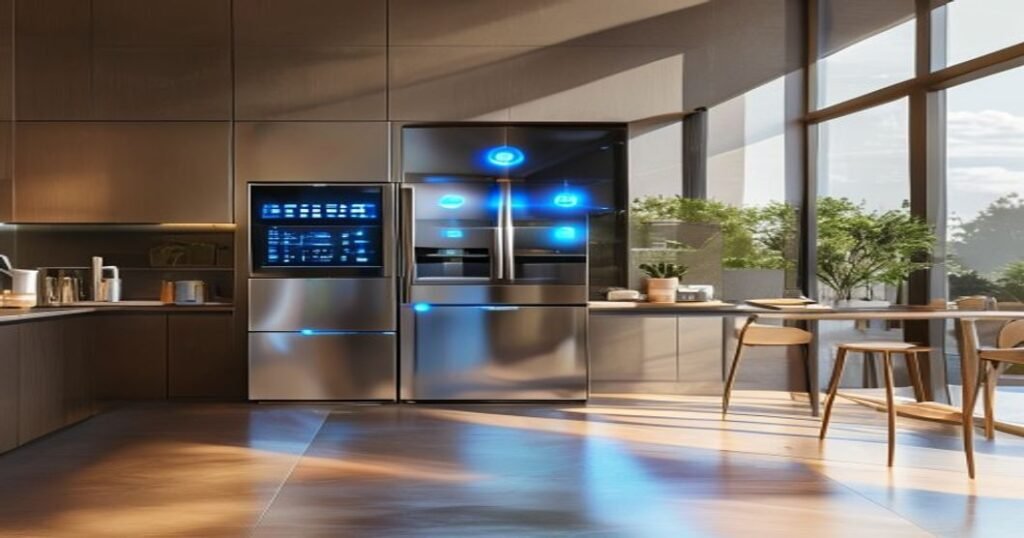
Understanding IoT-Connected Appliances in 2026: A Game-Changing Technology Landscape
The connected home appliance market has undergone a dramatic transformation between 2024 and 2026. The number of connected IoT devices reached 18.5 billion in 2024 and is expected to grow 14% year-over-year to 21.1 billion by the end of 2025, fundamentally changing how Miami-Dade residents interact with their kitchen and laundry appliances.
The IoT Connected Home segment shows a strong annual growth rate of 55.56%, with rising adoption of connected appliances, interoperable home ecosystems, and device-to-device communication architectures. Leading companies such as Whirlpool Corporation and Samsung Electronics have launched AI-enabled refrigerators and multifunctional ovens designed to meet evolving American consumer preferences, achieving over 20% annual sales growth between 2024 and 2026.
In the South Florida market specifically, this technological revolution means that homeowners are increasingly installing smart refrigerators, washers, dryers, and dishwashers equipped with Wi-Fi connectivity, voice assistants, and artificial intelligence capabilities. Wi-Fi connectivity became a baseline expectation, constituting 45% of shipments in 2024, with manufacturers preloading apps that issue firmware updates, energy-usage dashboards, and diagnostic codes via standardized over-the-air protocols.
Technical Advantages and Built-In Intelligence: Why Miami Homeowners Are Upgrading
By 2026, key washer features include AI-driven smart washing machine technology, IoT connectivity, enhanced energy efficiency, eco-friendly operation, adaptive wash cycles, predictive maintenance and seamless integration with smart homes. For Miami residents managing households in a challenging tropical climate, these features offer tangible benefits.
AI-Powered Refrigerators like LG’s Smart InstaView now suggest recipes based on available ingredients, track food consumption, and alert users when items are low. When paired, LG washers communicate with dryers over Wi-Fi to select the appropriate setting based on the clothes that were just washed, reducing energy consumption and fabric wear during South Florida’s humid summers.
AI-powered detection of an appliance’s health and performance helps you get out in front of maintenance tasks and schedule faster, more successful service calls. For appliance technicians in Miami-Dade, this predictive capability represents both an opportunity and a challenge—connected appliances can alert homeowners to developing problems before catastrophic failure occurs.
The Miami Climate Challenge: Why IoT Appliances Need Professional Repair Support
Miami and South Florida’s environment presents unique challenges for connected home appliances. High humidity forces your refrigerator and AC to remove both heat and moisture from the air at the same time, which uses significantly more energy. When relative humidity climbs above 50 to 60 percent, cooling appliances have to work much harder.
Climate factors—year-round humidity, heat, and storm-related voltage events—create higher appliance failure rates in Florida, Georgia, and North Carolina than the national average. The combination of persistent humidity, extreme heat, and hurricane season electrical stress means Miami-based smart appliances face accelerated wear on their electronic components.
Electrical components in refrigerators, ovens, and dishwashers corrode faster in high-humidity environments. Metal surfaces rust, connections corrode, and moisture can infiltrate supposedly sealed compartments. This is particularly critical for IoT devices, where moisture can damage circuit boards, Wi-Fi modules, and sensor systems.
Critical Repair Issues with Connected Appliances in 2026
Here’s where the challenge for Miami homeowners becomes apparent: Smart appliances with connectivity features fail at significantly higher rates than standard appliances. Consumers who actively use Wi-Fi features experience 92 problems per 100 appliances—nearly 50% more than non-connected appliances.
Washers, dryers, dishwashers, refrigerators and cooking appliances with Wi-Fi and Bluetooth capabilities experience an average of 87 problems per 100 appliances, while those without any connectivity features experience an average of 63 PP100.
Common issues requiring specialized repair expertise include:
Wi-Fi Connectivity Failures: Firmware update issues, loss of network connection, authentication problems with home networks, and incompatibility with legacy systems.
Sensor Malfunctions: Moisture damage to temperature sensors, humidity sensors, and moisture detection systems—all critical in Miami’s climate.
Electronic Control Board Damage: High humidity can destroy electronic control boards, requiring specialized diagnostics and replacement.
Power Surge Damage: Miami’s frequent thunderstorms create voltage spikes that damage the complex electronics in connected appliances. Surge protectors are essential preventative measures.
Predictive Maintenance Sensor Issues: When built-in diagnostic systems fail, homeowners lose early warning capabilities, potentially leading to catastrophic failures.
Professional Maintenance Recommendations for Connected Appliances
For Miami-Dade homeowners, professional maintenance of connected appliances requires specialized knowledge that goes beyond traditional appliance repair. Here are essential recommendations:
1. Regular Firmware Updates and Software Diagnostics: Connected appliances require periodic software updates. Professional technicians should verify that all devices maintain current firmware and that cloud-based diagnostic systems are functioning properly.
2. Humidity Control and Environmental Monitoring: The ability to monitor climate conditions and energy usage helps staff keep an eye on investments and provides alerts when extreme temperatures and high humidity conditions could result in burst pipes, mold cultivation, or blistering and cracking cabinetry and finishes. Miami homeowners should maintain indoor humidity between 40-60 percent using dehumidifiers and proper HVAC maintenance.
3. Condenser Coil Cleaning: Vacuum condenser coils every six to 12 months to keep the motor from overheating. In Miami’s dusty, humid environment, this becomes even more critical for connected refrigerators.
4. Surge Protection Systems: Given home networks received an average of 29 attacks per day in 2025, with global IoT attack attempts reaching 13.6 billion in just the first nine months of the year, and considering Miami’s electrical storms, whole-house surge protection systems are essential for protecting IoT appliances.
5. Door Seal and Gasket Inspection: Check door seals for cracks or gaps that let cold air escape. Avoid overloading shelves, which can block airflow. Miami’s heat and humidity create additional stress on these critical components.
Why Professional Repair Matters More in 2026
The complexity of connected appliances means that DIY troubleshooting often falls short. 39% of Americans who owned a large appliance that broke disposed of it because they couldn’t find someone they were happy with to fix it. That translates to 1 in 3 Americans overall.
Professional appliance technicians in Miami-Dade must now possess:
– Knowledge of multiple IoT platforms and standards (Matter, Thread, Wi-Fi 6/7)
– Software diagnostic capabilities alongside traditional mechanical skills
– Understanding of how Miami’s climate specifically affects connected device longevity
– Ability to perform predictive maintenance based on IoT-generated data
– Expertise in security updates and vulnerability